Imagine this: you open your favorite website — maybe your go-to online shop or a school portal — and it just won’t load. You refresh. Nothing. You open another site. It works fine. Strange, right? Well, you might’ve just witnessed a digital takedown in real time. That’s what happens when a website is hit by a DoS or DDoS attack — two cyber threats that sound similar but can bring big systems to their knees 😬
The Angry Visitor: Understanding DoS 😡💻
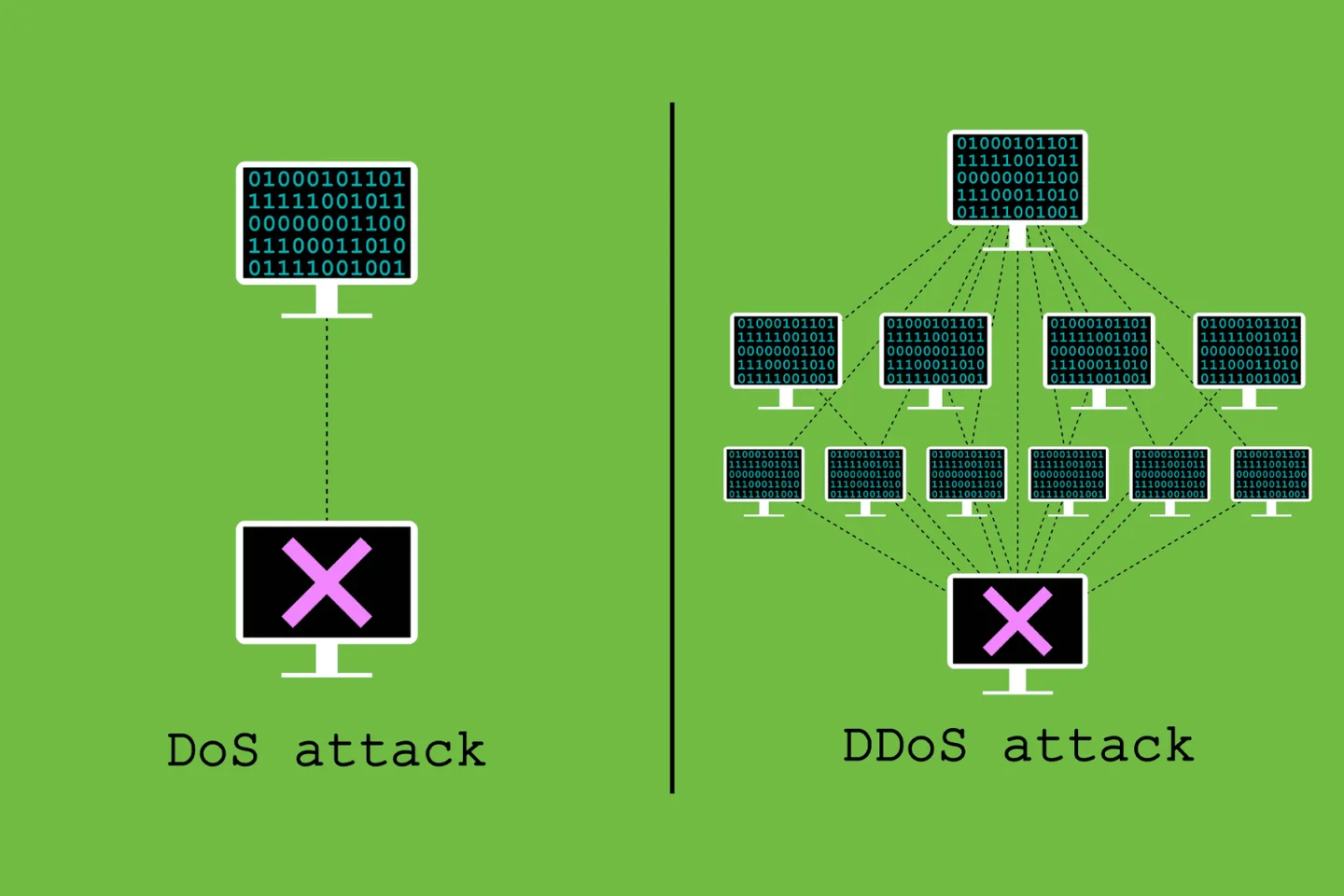
Let’s start with DoS — short for Denial of Service. Picture a café that only has five tables. Now, imagine someone walks in, orders five coffees, and sits at all five tables… but never actually drinks the coffee or leaves. Legit customers arrive but can’t find a seat. The café is technically open, but nobody else can use it. That’s what a DoS attack does to a website. One machine, one attacker, floods the system with fake requests until it can’t serve real users. It's annoying, but kind of a solo mission 🪑🚫
The Flash Mob: Meet DDoS 🧠👥🌐
Now, level it up. Instead of one person taking all the tables, imagine a flash mob storming the café. Hundreds — maybe thousands — of fake customers flood in from different directions, each taking up space and resources. That’s DDoS: Distributed Denial of Service. The attacker doesn’t work alone. They hijack devices across the world — often without the owners even knowing — and use them to overwhelm the target all at once. It’s chaos by design 🌪️📡
But... How Do They Do It? 🤔📲
Hackers build something called a "botnet" — basically an army of infected devices, like computers, routers, even smart fridges (yep, seriously). These devices, quietly compromised, wait for commands. Once the attack is triggered, they start bombarding the target with traffic. According to Cloudflare, some DDoS attacks send *millions* of requests per second — enough to knock down even large systems if they’re unprepared 📈💥
Why Do These Attacks Even Happen? 💬🎯
The motives vary. Some attackers want money — they might say, “Pay us or we’ll keep your site down.” Others are politically motivated, targeting government systems or institutions. Sometimes, it’s just for chaos or a twisted sense of fun. The damage can be massive: downtime, lost revenue, angry users, and a wrecked reputation. That’s why prevention and response planning are so critical for modern businesses and orgs 🏢💢
Defending the Digital Frontline 🛡️🧠
So how do we fight back? Big platforms now use DDoS protection services like Cloudflare, Akamai, or AWS Shield to filter out fake traffic. There’s also something called rate limiting, which blocks a user who sends too many requests too fast. And for personal users? Keep your devices patched, avoid sketchy downloads, and protect your Wi-Fi. You never want your laptop unknowingly becoming part of a botnet 🧑💻🚫
In the End, It’s About Resilience 🌱🔐
Cybersecurity isn't always about dramatic breaches or spy-level hacks. Sometimes, it’s just about keeping the doors open and the lights on in your digital space. DoS and DDoS attacks remind us that the internet, while magical, is also vulnerable. The more we understand these threats, the better we can build systems that don’t just work — but *keep* working when it counts 💡🌐
References:
Cloudflare – “What is a DDoS Attack?” [https://www.cloudflare.com/learning/ddos/what-is-a-ddos-attack/](https://www.cloudflare.com/learning/ddos/what-is-a-ddos-attack/)
OWASP – “Denial of Service (DoS) Attacks” [https://owasp.org/www-community/attacks/Denial\_of\_Service](https://owasp.org/www-community/attacks/Denial_of_Service)
Imperva – “DDoS Attack Types and Protection” [https://www.imperva.com/learn/ddos/](https://www.imperva.com/learn/ddos/)
CISA – “Understanding Denial-of-Service Attacks” [https://www.cisa.gov/news-events/news/understanding-denial-service-attacks](https://www.cisa.gov/news-events/news/understanding-denial-service-attacks)