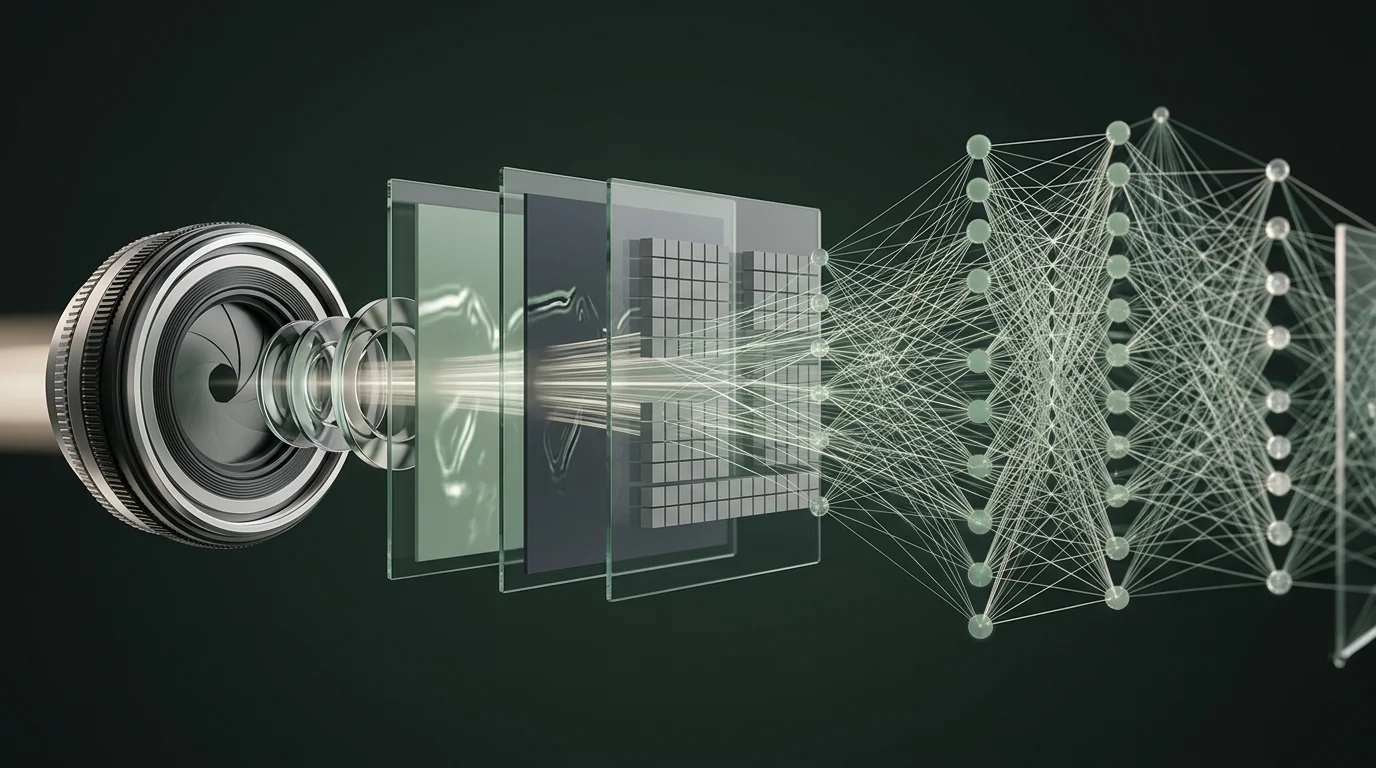
Computer Vision, a fascinating field within Artificial Intelligence, empowers machines to "see" and interpret
the visual world in a way analogous to human sight. At its core, it involves training computers to process
and understand images and videos, enabling tasks such as object recognition, facial detection, and scene
comprehension. Among its many applications, image classification stands out as a foundational challenge:
the ability to assign a label or category to an input image. This task is crucial for myriad real-world
applications, from medical diagnostics to autonomous vehicles and content moderation, making it a pivotal area
of research and development.
For robust image classification, Convolutional Neural Networks (CNNs) have emerged as the undisputed
champions. Unlike traditional neural networks that treat images as flat arrays of pixels, CNNs are specifically
designed to process pixel data with a grid-like topology, making them exceptionally good at identifying
patterns in visual data. The key innovation lies in their "convolutional layers," which apply filters to the input
image, effectively learning hierarchical features such as edges, textures, and ultimately, parts of objects.
These layers are followed by pooling layers to reduce dimensionality and fully connected layers for final classification,
creating a powerful architecture capable of learning complex representations directly from raw pixel values.
The power of CNNs stems from their ability to automatically learn relevant features from images,
eliminating the need for manual feature engineering—a laborious and often suboptimal process in traditional
computer vision. Through a process called backpropagation and gradient descent, CNNs adjust their internal
weights to minimize classification errors. This iterative learning allows them to capture intricate spatial
hierarchies and invariances to translation, rotation, and scaling, which are vital for accurate image recognition.
Modern CNN architectures, such as ResNet, Inception, and VGG, have pushed the boundaries of accuracy, often
surpassing human performance on specific image recognition benchmarks.
Implementing and training CNNs for image classification involves several practical considerations.
Acquiring and curating large, diverse datasets is paramount, as the performance of a CNN is heavily dependent
on the quality and quantity of its training data. Techniques like data augmentation (e.g., rotating, flipping,
cropping images) are often employed to artificially expand dataset size and improve model generalization.
Furthermore, careful selection of hyperparameters, such as learning rate and batch size, and the use of
transfer learning from pre-trained models, are critical for achieving optimal results and reducing training time.
As the field continues to evolve, CNNs remain at the forefront of enabling intelligent systems to understand
and interact with the visual world.
Memuat konten...